Friday, January 18, 2019

Dis and braggadocio in Icelandic Sagas: Part I

You need not look far to find scholars effusively praising the sagas and mythological writings of Icelanders. In her book, Eleanor Rosamund Barraclough says, “The sagas are medieval Iceland’s unparalleled storytelling legacy to the world.” In the Guardian, Ben Myers asks, “The Icelandic Sagas: Europe's most important book?” Nancy Marie Brown points out that the sagas are superlative not only for literary and historical merit, but because we have them: “More medieval literature exists in Icelandic than in any other European language except Latin.”

We adulate the sagas. They have inspired luminaries from J.R.R. Tolkein and W.H. Auden to David Mitchell and Neil Gaiman. It may come as a surprise to many just how smutty and wry they can be.

In a memorable episode in Njal's Saga, an Icelandic Chieftain visits Norway. He falls under the spell, so to speak, of the king's mature mother. Gunnhild arranges for Hrut spend nights with her in "the upper chamber.” She shows him patronage. Hrut gains glory in battle, as doughty Icelanders were wont to do in Norway. After a while, he seeks to return home to Iceland, much the richer. Gunnhild does not try to stop him, lavishing gifts, but inquires if he has a sweetheart back home. Hrut says no, but Gunnhild knows. She is a sorceress in truth, and curses him so he will not please his intended wife. Back home, Hrut marries Unn, but their marriage is troubled. Unn eventually confesses to her father: “When he comes to me his penis is so large that he can't have any satisfaction from me, and we've both tried every possible way to enjoy each other, but nothing works.”

The sagas are timeless because of their creative deployments of comedy, sex, rough talk, and of course violence, not in spite of them. These elements continue to entertain, surprise, and delight readers.

Nowhere is such material more concentrated than in the flyting, a compositional unit in literary theory, used in medieval Old Norse and also Old Irish literature. The flyting, also called senna, was a stylized battle of words. In a flyting, combatants exchange boasts, threats, insults, and challenges the way they might exchange blows in a physical battle. The abuse takes on a deviant sexual cast. Not all of it is funny. Misogyny is not uncommon. Homophobia is routinized.

Much of the same can be said of contemporary rap culture for much of its evolution from the late 1970s to today. I have found a striking similarity between Old Norse boasts and insults and the braggadocio and dis, or trash-talk, of contemporary rap. Like the saga writers of old, hip-hop vocalists have ritualized and raised these expressive forms to new heights.

To celebrate saga and rap affinities in off-color glory, I propose a new party game. It’s a group guessing game called “Medieval Iceland or Contemporary Rap?” The rules are simple. Someone stands and recites a line, lines, or line fragment from medieval Icelandic writings or contemporary rap. The text must contain an instance of boasting (braggadocio) or insults (trash-talk). The group’s job is to guess if the text is from contemporary rap or medieval Iceland. Bonus points for whoever can name the rapper/speaker or the song/text.

What, nothing comes to mind?

Well, let me suggest a few examples to get the party started (see references below):
  1. “I’ve never lifted a weapon without hitting my mark.”
  2. “If it’s just we two who wrangle with wounding words: I’ll turn out rich in my replies.”
  3. “I'm the authentic poet to get lyrical / For you to beat me, it's gonna take a miracle.”
  4. “I sell ice in the winter / I sell fire in hell … / I sell water to a well.” 
  5. “Pass me the scalpel, I'll make an incision, I'll cut out the part of your brain that does the bitchin'.” 
  6. “You have no more brains than an ox or an ass.” 
  7. “Blame God, he blew breath in my lungs / Second to none, wicked, I turn wives to widows” 
  8. “Why so silent, you puffed-up gods: have you nothing to say to me at all?” 
  9. “Pick from your teeth the pieces from the mare’s ass you ate.” 
  10. “You know we show love, motherfuckers, cause Venus sent me… / Pussies calling us assholes for penis envy.”
  11. “It’s said you played the witch… / beat the drum like a lady-prophet… / that signals to me a cock-craver.”
  12. “…you are the sweetheart of the troll… / he uses you as a woman every ninth night.”
  13. “Suck a dick, the day you beat me pigs will fly out my ass… / The best part about me is I am not you.”
  14. “Shut up … / As for each here inside … / at one time you’ve been their bitch.”
  15. “A bad bitch … / First things first I'll eat your brains… / And if I'm fake I ain't notice cause my money ain't!”
  16. “When you awaken, your manhood will be taken.”
  17. “I never thought that you… would try to get money out of your manhood.”
  18. “There are many who can’t tell by looking at him whether he’s a man or a woman.”
  19. “Shut up and sit down… I don’t find it funny, though your servants laugh…, when you sit with your legs tight, rubbing your thighs together.”
  20. “Even if I stuttered I would still shi shi shit on you.”
  21. “Hymir’s daughters took you for a toilet / which is why they pissed in your mouth.”
  22. “You’re dripping with shit, dairy maid.”
  23. “You straddled your brother… / and then you farted.”
  24. “Come now, you can’t have been sitting on your ear when you were standing up.”
See the answer key below.

Thursday, June 08, 2017

Amigo mio

Amigo mio, señor menos sibilante que la brisa,
Hoja en perpetuo otoño,
Pétalo que viaje por paracaídas,
En los remolinos del viento.

Debajo de las plantas,
Y en fondos de arrugas profundas,
Encontrarás el último polvo de arena,
En que vagaban los discípulos de Jesucristo.

En la nave levitan cánticos trapenses,
En la cueva elevan levaduras indómitas,
En el marfil captan deseos destapados,
En la torre estiran océanos auroras,
En los astros cruzan cuerpos errantes.

Polilla empolvada,
Criatura de sombra y cielo,
Criatura de luz,
El viento roba tu esencia,
La brisa te lleva al numen,
Aleteas contra la noche,
Me encuentras
En un peldaño inadvertido.

Wednesday, March 15, 2017

Juggling

A few years ago, I picked up juggling on a whim. It was a thing. A thing I couldn't do. A thing I wanted to do. I started practicing.

For those that can or have tried to juggle, you know that while it's simple it's not easy. Two hands, three balls, repeated arcs. No complication, complexity, or chaos here. How hard can it be?

Try it. Depending on previous experience and fine motor skills, you might be able to pick up the three-ball cascade in a few hours of practice. That's all it takes: practice and pushing yourself. It took me days of 30-minute sessions.

Some beginners start with handkerchiefs, but following Teddy Roosevelt, I used what I had, where I was. Lacrosse balls, in the basement of my parents' house, where I was living. Days later, I graduated to juggling walks around the neighborhood, chasing dropped balls down hills. A cigar-smoking neighbor said, "Can you chew gum at the same time too?"

I branched out. I bounced balls against walls. I learned to run and juggle, or "joggle." I juggled in tandem with other people. I learned a few three ball tricks. I bought antique, laminated, balanced oak juggling 'clubs' on Craigslist and learned to juggle them without more than a split lip. Eventually, I ordered a set of fluorescent-green molded plastic clubs, which are more reliable, more resilient, and less likely to knock me out. Even more eventually, after a few years, I learned how to juggle four balls.

Over the years, I've learned a few things from juggling.

Tuesday, November 15, 2016

Redefine the possible

Fiction

I sat on the chapel steps and watched the drones dismantle the university. They emerged one by one from some crawl space onto the roof of the Hall of Languages. Tethered to an anchor on the ridge line, they pried off slate tiles, which smashed on concrete sidewalk or lodged in the grass like graves. I remembered reading Shelley in room 405 with Professor Van Trogle, “Look on my works ye mighty and despair!”

At the music college, the drones were further along, working from the top down. Slate, beams, nails and fasteners and insulation puffs littered the ground. The stately spires now looked like icecreamless cones. I watched as the centuries-old bell was trucked off in an overfull bin with the rest of the detritus. Drones chipped mortar from blocks of rust-hued sandstone steeped in Mozart, Sibelius, and Ives.

The drones were well trained. I could see that. They had been recruited from the fraternities and now labored in yellow hats and brown boots. Stolid. Professional. Unhesitating. They had found their calling. They destroyed simply, deliberately, secure in the task and connected to greater purpose. Building by building, desk by desk, book by book, blackboard by blackboard, they undid more like time than humans. It felt right.

We had agreed, all of us, to abandon the human project. The striving, building, colonizing, propagating. All that growth. Once we had agreed to stop, it was an easy step down slope to the destruction consensus. Why not let another force take over, find another model, not merely accept but facilitate time’s implacable erosion?

Not everyone was able to abide by the accord of organized erasure. I saw the first protesters arrive in jeans and sweatshirts, wearing work gloves, toting hammers. They milled in front of the chapel waving signs that said, “Destruction for All,” “Rosie the Rivener,” and “Civil De-Engineering 101!” Somebody played and then promptly smashed a guitar.

Campus security guards appeared to oppose the troublemakers, but they were outnumbered and apathetic and eventually sat, with me, on the steps. We didn’t budge when the group of protestors swelled past some threshold and stormed the chapel. Black high tops and knee-high boots swept past, keen to denature, tear down, obliterate.

The guards and I looked at each other and shrugged. Reason and consensus said look to time, but these students and community members followed another authority: their bodies. They worked to erase the human stain in the spirit it had spread, the only way they could. Now that this force was unleashed, we were powerless to resist it; we gave ourselves into the destruction.

Friday, October 28, 2016

Japan, photos


Japan, observations

I'm a mad dasher, I might as well admit it. I'm more comfortable running around, packing in the activities, losing myself in action. When I wake, I feel an urge to move, the stress of stillness...

Eerily quiet on the Hibiya line. Not a single voice heard in the packed subway car station after station. A girlish utterance absorbs into unforgiving human forms. What are these clean, self-contained, silent individuals on the express train thinking about this weekday morning...

The girl powdering her cheeks and limning her eyes smiling happy in her pouty prettiness. The guy massaging his temples. The advertisement banners hanging down from the center roof of the train that would never fly in New York; people'd put their heads through the paper ads like door curtains. The little subway dance, when someone needs to disembark around you, and you have to shuffle with tiny steps, like dancing with a six-year-old. People are more careful, quiet, and considerate here. Less of the closed-in fear and stressful almost-shoving induced by seemingly imminent door closings. I lean against the ‘back’ door and then it opens at the next station. An unexpected reversal. My logic proved faulty. Touché, subway...

What Manami said: there are two Japan's. Tokyo is not Japan!...

Japan, even Tokyo, is more structured and ordered . There's less of the disordered vibrancy that characterizes America; also called diversity or mix or "low" culture. Consider the ubiquitous umbrella, the occasional parasol...

Perfectionism is the opposite of fatalism...

Onsen tubs. Reed brooms. Raised train lines. Sea to mountain declines. Street fair food stalls. Monstrous insects. Sylvan shrines: Miyazaki...

At 5pm exactly monks ring temple bells all through Kyoto and people leave offices. Sidewalks throng with men and women in formal wear and black shoes. In some quarters, some women wear kimonos, white socks, wood sandals. They nod to smartphones waiting for the light to change...

The assumption now is that travelers will go on, are in the middle of long-term vagabondings. It wasn’t always like this. I remember the first time I heard about someone picking up and running off, how it surprised and titillated me. Now it's par for the course. Ever more wanderers...

Back at the hostel, the Italian says, “Where can I go to meet the girls!,” laughing and leering at the young Japanese woman, Siuri, staffing the hostel at 10pm. She’s says, “Why are you laughing? Haha. Too Italian!”...

Monstrous coy and carp jockey for position in the park pool. Feed me!...

I'm going to see some thing. I'm already imagining taking photos of the thing, showing those photos to other people, and how they will react to the photos. A mind divided upon itself will fall...

The vampire of regret sucks joy out of the present...

I grasp my walking stick and plan each foot-plant on the mountain trail. The wind blows the tree-tops; I think the trees are breathing. I follow their lead, take a deep breath and then another. I think, “The forest teaches you things. How to breathe, how to be patient, present...”—I blunder face-first into a spider web, drop my stick, and clutch face and hair in mortal fear...

Thursday, August 18, 2016

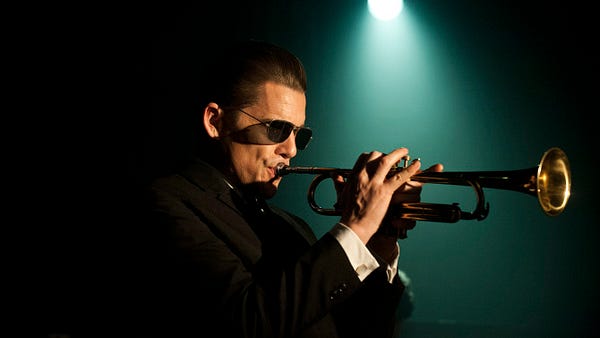
Ethan Hawke on life, work & "Born to Be Blue"

I was sitting in the dark at Nitehawk cinema in Williamsburg, Brooklyn. The film had ended. And Ethan Hawke was dropping wisdom.

I had just watched Hawke portray hunky, junkie jazz trumpeter and singer Chet Baker in biopic Born to Be Blue. The film had left me in limbo: I didn’t know what to think or how to judge. I felt conflicting emotions. Into this, stepped Brooklyn resident Hawke to talk about the movie, Chet Baker, and his own life.

Born to Be Blue plays like one of the wispy, wistful Chet Baker’s tunes that Hawke whisper-sings on screen. Chet sings about love and about not-love. He sings “Let’s defrost in a romantic mist, let’s get crossed off everybody’s list…Let’s get lost.” He sings “My Favorite Valentine” to his girlfriend, Jane Azuka (Carmen Ejogo) who he seduces from the set of a biopic in the biopic where he plays himself and she plays “The Women of Chet.” At first she can’t understand those women, then she can’t not become them. Chet has the stuff of legends, but he’s fragile, wasted, like a sparrow with a broken wing. The film shows how Baker, and those irresistibly drawn to him, try to mend his wing so he might fly again.

On the Nitehawk stage, Ethan Hawke talks like some of his famous characters. He speaks the imaginative blue streak of Jesse in the Before series and with the insight and sincerity of Mason Sr., the dad in Boyhood.

He says you should watch the film (yes, you should!) as if you’re listening to jazz: “There’s this amazing thing that happens when you listen to Chet’s music. And a lot of great jazz. It just takes your brain somewhere else. The movie should be like if you laid in your room and closed your eyes and just listened to three Chet Baker LPs in a row, what would come to mind?”

Like Chet Baker, Hawke kicked off his career young. He rose to acclaim playing the shy student in Dead Poets Society in his late teens. After that apex, he said, “You see absolutely nowhere to go. You just think that’s the normal temperature. I’m going to do a movie and it’s going to be great and everybody in the world is going to love it and everybody is going to say wonderful things about me and I’m going to actually work with wonderful, really talented people who really care about me and make lots of friends. This is a great life! Well, it’s never happened again!”

Baker got his big break from Charlie Parker, whose trumpet solos Baker played back to him at an audition. Parker invited Baker on the road. Baker soon cribbed the Bird’s heroin habit too.

Hawke talks to the challenge of staying straight and true in the spotlight. “[Chet] goes on the tour with Charlie Parker, he’s meeting everyone. And that was the key to the kingdom. Then what do you do once you’re there? How do you not turn into a rotten prince? It’s very hard. You have to actually be a substantive human being. And that is a tremendous amount of work, that most of us are not up for.”

When he talks about drugs, Hawke commends the film for resisting the urge to “finger wag” and says, “While we can all agree that drugs hurt people and poison our own roots, a lot of really good people do them." He mentions the late Philip Seymour Hoffman. "To ignore why they might choose such a path is to ignore a giant truth and to sell young people a lie. The lie isn’t that drugs are bad. They are really destructive. But if you don’t really look at why, what insecurities are driving it, then you don’t understand why somebody smart would do it.”

Few of us know what it’s like to attain princely acclaim at any age. But many can relate to feeling an inconsistency between how the world sees us and we see ourselves. Maybe we feel false for receiving external acclaim but feeling impoverished inside. Maybe we feel convinced of our own special talents, but overlooked by the world. Hawke suggests that winning and losing the fame game are often as close as adjacent cards in a deck. Each is fraught with its own perils.

Hawke advises us not to use the lottery of life to inform our values and self-worth: “There’s no rhyme or reason all the time. And so things like integrity and grace have to be their own reward. The world doesn’t applaud you for that. The world often applauds some of the most vile behavior. And that’s mysterious.” Instead, he suggests that we find value in ourselves: “Each one of us is imbued with something beautiful and unique to ourselves. For lack of a better word that’s our talent. You can piss on it, shit on it, or treat it with respect. It’s still there. It’s this thing. It’s you. It’s me. It’s who we are. It’s the essence of us.”

Saturday, April 30, 2016

On hands

Sometimes I look at my hands and see stunting. I see my dad’s hands, my brothers’ hands. I see their statures. Their hands are broader and digits longer, their bodies taller. I see my hands covered and made diminutive, they shrink in comparison, and I shrink with them. I see what could have been, me standing statuesque and grand, hands like hams dangling on orangutan arms.

Sometimes I look at my hands and see my hands. I see scaly dermis, dessicated webbing, bashed fingernails. I see the index shake. I see where in high school I tried my resolve with a lit cigarette. I see drums in abductioned thumbs. I see rough rocks and vibrating roundwounds in pocked callous coverings. In gathered palm, I see vessels of water uplifted, morning ablutions, satiating slurping. I see aqueducts flushing blood from shirtsleeve to wrist to digit entwining. I see handshakes. I see lines that lead to fortuitous futures. I see myself grasp a pencil, pack a snowball, knead thighs, juggle pins, pledge allegiance.

For a time, I saw hands everywhere. I saw club thumbs, stunted and decapitated digits, scars, tattoos, bitten nails, sinews. I saw hands in all manner of shape and size, all manner of human hue: roasted coffee, clotted cream, cedar, humus, ivory, butterscotch. I saw potent hands, penitent hands, dry hands, turgid veins, parchment skin. I saw all species of adornment: tiny spoons wrapped 'round thumbs, gigantic runner’s watches on wrists, fingernail paints and patinations, wedding bands on ring fingers, multi-finger rings, not to mention gloves of all sorts, which hide hands. Beneath these and other burdens and beauties and buffers, hands abide. I saw hands that had performed baptisms, held guns, hefted beams to scrape skies, hands that painted hands, absent hands, tiny hands, ancient hands.

I suggest you see hands, not the least your own. Hands may be dumb instruments but they work wonders, tell stories, and hold the weight of the world.

Friday, April 15, 2016

Practicing compassion and forgiveness

Edith D. Hill: "After healing, comes living."
Rune Lazuli: "You want to perform a miracle? Forgive yourself."

Forgiving and healing are not discrete, terminable acts. They're processes that lead one into another. Wrongs make wounds. Forgiveness makes healing: covers the wound to restore the relation.

I wound the bond to myself just as to another. I am singular but divided. I can appeal to myself to heal myself.

To forgive, I take responsibility in understanding. I acted for reasons if not reasonably, according to an ethics if not ethically. I use compassion to find learning and forgiving and move on. That way, the past is passed on to the present and can be worked into a better future.

As soon as I forgive myself for transgressing against myself I commit another transgression. I always will. So I build forgiveness into practice, ethic, attitude, awareness. I allow forgiveness to drive everyday decisions.

Scar tissue is insensate, not an armor, a numbness. Feeling is living. Forgiveness that leads to right acting leads to healing and enhances the living.

Let forgiveness fan the feeling that is living into a furnace.

Thursday, February 04, 2016

Right awareness

The mind is the first and foremost front in the war of getting what you want.

Many rightly link thoughts to words, words to actions, actions to habit, habit to character, and character to outcomes. And many rightly say change what you can and tolerate or transmute what you can’t.

We exercise utmost control in our thoughts, as nowhere else, and can there gird ourselves against external struggle and adversity, and make our minds the seedbed of serenity and success. Yet more often than not the mental palace is a house divide unto it self: it teems with fear and self-doubt, and small challenges and disappointments create turmoil.

One way to change your thoughts is to strive to cast adversity as opportunity. Take traffic. Traffic sucks. Traffic delays, disturbs, wastes, encroaches on our arrow-focused, little efforts. Traffic makes us feel like a pawn, one among multitudes of pawns. Where are all these drones, ourselves included, off to anyway? Traffic incites self-deprecating and second-guessing, causes us to regret snoozing, shower languishing, or coffee lingering, because if only we'd arisen at cockscrow, we'd damn well be there by now! Traffic sucks you from positive and productive thinking into a pit of distraction, frustration, anxiety despair.

While we may avoid traffic, once we're in traffic, it's too late. All we can manage is our mental response. There, we are master. Each time you resist the suck, you further fortify your mental palace into a mental fortress.

With right awareness, you can convert mistakes and failure into challenge and success. The character Somni-456 talks about this in David Mitchell's time-and-space-spanning novel Cloud Atlas. (For context, a sony is a computer. Go is a strategic game like chess.)
Well, Hae-Joo probed, what did I do to relax?
I play Go against my sony, I said.
“To relax?” he responded, incredulous. “Who wins, you or the sony?”
The sony, I answered, or how would I ever improve?
So winners, Hae-Joo proposed, are the real losers because they learn nothing? What, then, are losers? Winners?
I said, If losers can exploit what their adversaries teach them, yes, losers can become winners in the long term.
Cast adversity as opportunity to create solace inside from inside, and you will find it in pursuits outside.