Showing posts with label Self-improvement. Show all posts

Wednesday, March 15, 2017

Juggling

A few years ago, I picked up juggling on a whim. It was a thing. A thing I couldn't do. A thing I wanted to do. I started practicing.

For those that can or have tried to juggle, you know that while it's simple it's not easy. Two hands, three balls, repeated arcs. No complication, complexity, or chaos here. How hard can it be?

Try it. Depending on previous experience and fine motor skills, you might be able to pick up the three-ball cascade in a few hours of practice. That's all it takes: practice and pushing yourself. It took me days of 30-minute sessions.

Some beginners start with handkerchiefs, but following Teddy Roosevelt, I used what I had, where I was. Lacrosse balls, in the basement of my parents' house, where I was living. Days later, I graduated to juggling walks around the neighborhood, chasing dropped balls down hills. A cigar-smoking neighbor said, "Can you chew gum at the same time too?"

I branched out. I bounced balls against walls. I learned to run and juggle, or "joggle." I juggled in tandem with other people. I learned a few three ball tricks. I bought antique, laminated, balanced oak juggling 'clubs' on Craigslist and learned to juggle them without more than a split lip. Eventually, I ordered a set of fluorescent-green molded plastic clubs, which are more reliable, more resilient, and less likely to knock me out. Even more eventually, after a few years, I learned how to juggle four balls.

Over the years, I've learned a few things from juggling.

Thursday, August 18, 2016

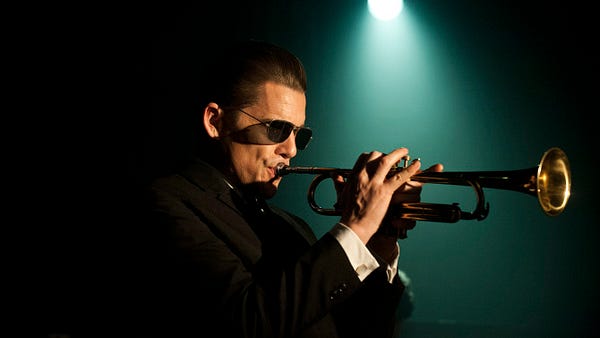
Ethan Hawke on life, work & "Born to Be Blue"

I was sitting in the dark at Nitehawk cinema in Williamsburg, Brooklyn. The film had ended. And Ethan Hawke was dropping wisdom.

I had just watched Hawke portray hunky, junkie jazz trumpeter and singer Chet Baker in biopic Born to Be Blue. The film had left me in limbo: I didn’t know what to think or how to judge. I felt conflicting emotions. Into this, stepped Brooklyn resident Hawke to talk about the movie, Chet Baker, and his own life.

Born to Be Blue plays like one of the wispy, wistful Chet Baker’s tunes that Hawke whisper-sings on screen. Chet sings about love and about not-love. He sings “Let’s defrost in a romantic mist, let’s get crossed off everybody’s list…Let’s get lost.” He sings “My Favorite Valentine” to his girlfriend, Jane Azuka (Carmen Ejogo) who he seduces from the set of a biopic in the biopic where he plays himself and she plays “The Women of Chet.” At first she can’t understand those women, then she can’t not become them. Chet has the stuff of legends, but he’s fragile, wasted, like a sparrow with a broken wing. The film shows how Baker, and those irresistibly drawn to him, try to mend his wing so he might fly again.

On the Nitehawk stage, Ethan Hawke talks like some of his famous characters. He speaks the imaginative blue streak of Jesse in the Before series and with the insight and sincerity of Mason Sr., the dad in Boyhood.

He says you should watch the film (yes, you should!) as if you’re listening to jazz: “There’s this amazing thing that happens when you listen to Chet’s music. And a lot of great jazz. It just takes your brain somewhere else. The movie should be like if you laid in your room and closed your eyes and just listened to three Chet Baker LPs in a row, what would come to mind?”

Like Chet Baker, Hawke kicked off his career young. He rose to acclaim playing the shy student in Dead Poets Society in his late teens. After that apex, he said, “You see absolutely nowhere to go. You just think that’s the normal temperature. I’m going to do a movie and it’s going to be great and everybody in the world is going to love it and everybody is going to say wonderful things about me and I’m going to actually work with wonderful, really talented people who really care about me and make lots of friends. This is a great life! Well, it’s never happened again!”

Baker got his big break from Charlie Parker, whose trumpet solos Baker played back to him at an audition. Parker invited Baker on the road. Baker soon cribbed the Bird’s heroin habit too.

Hawke talks to the challenge of staying straight and true in the spotlight. “[Chet] goes on the tour with Charlie Parker, he’s meeting everyone. And that was the key to the kingdom. Then what do you do once you’re there? How do you not turn into a rotten prince? It’s very hard. You have to actually be a substantive human being. And that is a tremendous amount of work, that most of us are not up for.”

When he talks about drugs, Hawke commends the film for resisting the urge to “finger wag” and says, “While we can all agree that drugs hurt people and poison our own roots, a lot of really good people do them." He mentions the late Philip Seymour Hoffman. "To ignore why they might choose such a path is to ignore a giant truth and to sell young people a lie. The lie isn’t that drugs are bad. They are really destructive. But if you don’t really look at why, what insecurities are driving it, then you don’t understand why somebody smart would do it.”

Few of us know what it’s like to attain princely acclaim at any age. But many can relate to feeling an inconsistency between how the world sees us and we see ourselves. Maybe we feel false for receiving external acclaim but feeling impoverished inside. Maybe we feel convinced of our own special talents, but overlooked by the world. Hawke suggests that winning and losing the fame game are often as close as adjacent cards in a deck. Each is fraught with its own perils.

Hawke advises us not to use the lottery of life to inform our values and self-worth: “There’s no rhyme or reason all the time. And so things like integrity and grace have to be their own reward. The world doesn’t applaud you for that. The world often applauds some of the most vile behavior. And that’s mysterious.” Instead, he suggests that we find value in ourselves: “Each one of us is imbued with something beautiful and unique to ourselves. For lack of a better word that’s our talent. You can piss on it, shit on it, or treat it with respect. It’s still there. It’s this thing. It’s you. It’s me. It’s who we are. It’s the essence of us.”

Friday, April 15, 2016

Practicing compassion and forgiveness

Edith D. Hill: "After healing, comes living."
Rune Lazuli: "You want to perform a miracle? Forgive yourself."

Forgiving and healing are not discrete, terminable acts. They're processes that lead one into another. Wrongs make wounds. Forgiveness makes healing: covers the wound to restore the relation.

I wound the bond to myself just as to another. I am singular but divided. I can appeal to myself to heal myself.

To forgive, I take responsibility in understanding. I acted for reasons if not reasonably, according to an ethics if not ethically. I use compassion to find learning and forgiving and move on. That way, the past is passed on to the present and can be worked into a better future.

As soon as I forgive myself for transgressing against myself I commit another transgression. I always will. So I build forgiveness into practice, ethic, attitude, awareness. I allow forgiveness to drive everyday decisions.

Scar tissue is insensate, not an armor, a numbness. Feeling is living. Forgiveness that leads to right acting leads to healing and enhances the living.

Let forgiveness fan the feeling that is living into a furnace.

Thursday, February 04, 2016

Right awareness

The mind is the first and foremost front in the war of getting what you want.

Many rightly link thoughts to words, words to actions, actions to habit, habit to character, and character to outcomes. And many rightly say change what you can and tolerate or transmute what you can’t.

We exercise utmost control in our thoughts, as nowhere else, and can there gird ourselves against external struggle and adversity, and make our minds the seedbed of serenity and success. Yet more often than not the mental palace is a house divide unto it self: it teems with fear and self-doubt, and small challenges and disappointments create turmoil.

One way to change your thoughts is to strive to cast adversity as opportunity. Take traffic. Traffic sucks. Traffic delays, disturbs, wastes, encroaches on our arrow-focused, little efforts. Traffic makes us feel like a pawn, one among multitudes of pawns. Where are all these drones, ourselves included, off to anyway? Traffic incites self-deprecating and second-guessing, causes us to regret snoozing, shower languishing, or coffee lingering, because if only we'd arisen at cockscrow, we'd damn well be there by now! Traffic sucks you from positive and productive thinking into a pit of distraction, frustration, anxiety despair.

While we may avoid traffic, once we're in traffic, it's too late. All we can manage is our mental response. There, we are master. Each time you resist the suck, you further fortify your mental palace into a mental fortress.

With right awareness, you can convert mistakes and failure into challenge and success. The character Somni-456 talks about this in David Mitchell's time-and-space-spanning novel Cloud Atlas. (For context, a sony is a computer. Go is a strategic game like chess.)
Well, Hae-Joo probed, what did I do to relax?
I play Go against my sony, I said.
“To relax?” he responded, incredulous. “Who wins, you or the sony?”
The sony, I answered, or how would I ever improve?
So winners, Hae-Joo proposed, are the real losers because they learn nothing? What, then, are losers? Winners?
I said, If losers can exploit what their adversaries teach them, yes, losers can become winners in the long term.
Cast adversity as opportunity to create solace inside from inside, and you will find it in pursuits outside.

Sunday, August 02, 2015

Challenge yourself

To entertain yourself, to impress yourself, to daily go "dude, you're awesome," to attain equipoise, to stay focused, to discover the taproot, to respect others, to respect life, to minimalize, to go for goals, to accept the blows of the hammer, to take lightly, to be the foam of the wave, to not despair, see humor in it all, to learn, to express, to well rest, to dance with values, to know thyself, to be compassionate, to take responsibility, to say no, to shut doors, to dance, to humiliate yourself, to make commitments, to embark, to settle in, to explore landscapes of long-term love, to wing it, to plan and build machines and schedule and budget and spreadsheet, to push yourself and others, to seek those that push you, to seek art in the mundane, to hold yourself well, to sleep well and don't regret waking, to get specific:

To jump off decrepit pier-posts into Lake Michigan, to dance the twist with Early Clover and Westport's crazed jet set at the Levitt Pavilion, to say "hey, I'm Brad".

To write more than read, percuss more than tap toes to others' grooves, speak more than be spoken to, to debate freely and fearlessly, to call out cabbies' racism, to stop uttering jejune curses—the crasset and banalest of language—to cease immoderate drinking—another poison and crutch—to trust, to share, to laugh, to find faith in the non-cost-benefit-calculating, non-optimizing, non-indecisive, much-knowing decision-making apparatus of the body, to bury past blunders and future doubts with current successes.

To suspend sinking the self into endless abysses of meta-meta-meta-... analysis and just be and do. To avoid the self-deprecating self-shaming and self-doubting words, phrases, and caveats that infiltrate thoughts and words, to banish shame from joy, to cease self destruction, to take breaks, to bypass desires to attain goals, to be your biggest critic and your biggest fan.

To love yourself the only way: frankly, unflinchingly, unjudgingly, and transparently in consideration of all you are, were, and will be and accept and then just be.

Wednesday, December 24, 2014

Notes to self

Sometimes I think "Everyone admires what in me I don't think highly of" referring to my higher education, my work, and my travels. But when I said something of this to my Dad, he said, "Society doesn't care about you," and a little later, "You're not different than anybody else."

My dad's observations light up how in overfocusing on myself I end up in the absurd. There is no society. Even if there were, it wouldn't give a damn about me. Nobody cares. My friends and family care but only in that they want the best for me. And if I please one person, it ought to be me; the rest will follow.

My dad pointed out how little I've committed to anything in my life. Which is too true. I'm a dabbler, a dilettante, a tourist of trades and travels. I loathe this about myself.

I've sunk years into toil that I despise. Is this my idea of how to live a life? Then again, whose idea is it? My parent's? Well, yeah, there's some of that. They convinced me to stay the course when I strayed from economics and "wanted to read more Shakespeare." Yet here I am again.

I guess I would retrace my steps, for the most part, not knowing where other paths might have swept me off to. I just wish I'd built up all the while some reserve storehouse of skills and knowledge that I respect. I'm very much an asshole to myself, but partly because I've let myself down so.

I must also laugh and say to myself, "You goof, you self-immolating, ass-backwards, self-befuddling son of fortune. How now this gloomy navel gazing when sun is for basking, seas are for soaking, soulful souls are for loving? Seriously, why so serious? Late, inherited Christian crisis mentality has you by the cobblers."

"Get over yourself. Looking within has only confused you; time to turn outward. Record, depict, shape, impact. Be as a child, new to the world. Revel in its strangeness. Look to others. Cast your net outward and find solace in action."

"Make a break. Start. Start small. Just do it. Things have a way of carrying you away, which is what you want and need to get back your self respect."

Wednesday, February 15, 2012

Quotations: action, production

Note: Many of these are from the website of Elisabeth Fosslien. Look for a justification of this move later.

Kingsley Amis: For once in his life, Dixon resolved to bet on his luck. What luck had come his way in the past he'd distrusted, stingily held on to until the chance of losing his initial gain was safely past. It was time to stop doing that *.

Mawi Asgedom: Like any dream, you have to start believing that you can do it. You don't quite know how it will turn out but you start anyway. Discipline is your best friend. If you have the discipline to write two pages every day, after 150 days, you have 300 pages. I actually use this in my speeches to show students how important discipline is. Something small, writing two pages, if done repeatedly can become something big, a 300-page book. That's my motto for success: dream big, do small, every day.

Saul Bellow: what he preached at me...the thing to do: not to dissolve in bewilderment of choices but to make myself hard, like himself, and learn how to stay with the necessary, undistracted by the trimmings *... A description: wild internal disorder, or even with the fact that he was quivering. And why? Because he let the entire world press upon him. For instance? Well, for instance, what it means to be a man. In a city. In a century. In transition. In a mass. Transformed by science. Under organized power. Subject to tremendous controls. In a condition caused by mechanization. After the late failure of radical hopes. Owing to the multiplied power of numbers which made the self negligible... At the same time, the pressure of human millions who have discovered what concerted efforts and thoughts can do. As megatons of water shape organisms on the ocean floor. As tides polish stones. As winds hollow cliffs. The beautiful supermachinery opening a new life for innumerable mankind. Would you deny them the right to exist? Would you ask them to labor and go hungry while you enjoyed delicious old-fashioned values? You - you yourself are a child of the mass and a brother to all the rest. Or else an ingrate, dilettante, idiot. There, Herzog, thought Herzog, since you ask for the instance, is the way it runs. On top of that, an injured heart, and raw gasoline poured on the nerves... The busy bee has no time for sorrow *.

Samuel Clemens: Twenty years from now you will be more disappointed by the things that you didn't do than the ones you did do... so throw off the bowlines, sail away from the safe harbor, catch the trade winds in your sails... explore, dream, discover.

Benjamin Disraeli: Action may not always bring happiness; but there is no happiness without action.

Seth Godin: Comments and Twitter are like a Fresnel lens. You can use them to focus attention if you’re very disciplined and very good, or, if you’re like me, you’ll end up finding your energy and attention diffused into a maelstrom, lost to the winds of inanity, anger or trivia. * The first thing you do when you sit down at the computer: Let me guess: check the incoming. Check email or traffic stats or messages from your boss. Check the tweets you follow or the FB status of friends. You've just surrendered not only a block of time but your freshest, best chance to start something new...the first thing you do should be to lay tracks to accomplish your goals, not to hear how others have reacted/responded/insisted to what happened yesterday * .

Samuel Huntington: Some people may say that people in glass houses should not throw stones... I do not mind performing a useful function by throwing stones and thus encouraging others to move out of their glass houses, once I have moved out of mine (jstor p. 304).

Rudyard Kipling: [Lurgan Sahib] 'By doing it many times over till it is done perfectly--for it is worth doing' *.

Somerset Maugham: In my heart was a desire to live more dangerously. I was not unprepared for jagged rocks and treacherous shoals if I could only have change -- change and the excitement of the unforeseen (*).

Haruki Murakami: [Colonel Sanders] "We're talking about a revelation here...a revelation leaps over the borders of the everyday. A life without revelation is no life at all. What you need to do is move from reason that observes to reason that acts. That's what's critical" (255)...

[Kafka] "But I've always tried to get stronger."
"That's very important," the brawny one says, "Very important--to do your best to get stronger" (386).

Janwillem van de Wetering: Good luck comes to those who keep trying.

Ad astra.

Tuesday, November 09, 2010

Reflections on being a longhair

Shearing time = crying time. I'm like an infant at circumcision. Or now I know what it feels like to become a eunuch. Except in this case it's voluntary amputation, and its womanhood (of the strictly and crassly superficial variety), not manhood, to which I bid adieu.

In fact, I'm saying peace to nigh two years of identity formation. How important has this longhair aberration been? And why did I pursue this path, persist, and then finally decide to give it up? These answers are not altogether clear. They're bound up with my contested and mercurial self-appraisal. Allow me to explore some thoughts in somewhat-candor.

Social influence has been instrumental on my hair habits. I am rather impressionable. Consider this sequence of events: Between January and May 2009, three long-haired men entered and exerted considerable influence on my social reality. I respected and emulated all of them in various ways. All were longhairs. After getting a haircut in February, 2009, I wouldn't trim for another 14 months. Coincidence? I think not.

I have since fallen out of contact with these gentleman. I am in Chicago. Nobody I know has long hair; some people have come out in opposition to the institution. In fact, short hair is hegemonic among men in this professionalized, rigorous academic atmosphere. This has sown doubt where secure ambivalence reigned before. Even if people like it, the bureaucracy's impersonal regulations squash atypical expression. And I fear failure. Worse, I have not done superlatively on midterm examinations and feel tenuous.

Sometimes I think that abnormality and anti-conformist expression are normatively praiseworthy. I get worked up about aesthetics, art, and all forms of cultural and personal production. Hair and fashion, in this view, are modes of public art. Even the fruits of egotism can have positive externalities.

Sometimes I eschew ostentation, superficiality, and the hubris of special-feeling. I condemn myself. Special? Like I'm superior 'cause I have a freaking weird, pac-man pufftastic frizzle fro? Oh, man! What arrogance, what overlyanalyzed hogwash. I'm an unremarkable insect.

Cutting is part of my yearning for an elusive austerity. There was a time when I thought I should enter the army (Thank you, Robert A. Heinlein, yet again, for fueling this obsession which, like so many of other social and intellectual preoccupations, never became anything other than hypothetical idealism). Inculcate in me diligence and mental power, army, society, cryptic authority. Self-help-me. I am a lemming, leaderless. A sheep without shepherd.

Baaaaaaaah, shear me!

Of course, the hair was anti-sheep. But it is no surprise that social pressure operates even among the most marginal. Social norms, fads, and fashions exert and represent power ubiquitously. Thus the bumper-stickers disclaiming "you are so alike in your nonconformity" or "nonconformity is the new conformity."

Despite the somber tone of the text, I do sincerely feel that my hair exploration has been overwhelmingly gratifying. It was a means of personal exploration and innovation. I think I know me now better for the manifold experiences it impressed on me. Cornrows cannot exist independent of long hair. Nor can the endearing acts of the strangers who found the fro inspiring enough to comment upon or poke. Most nearly everybody was positive about it. If I want to be really optimistic, I could go as far as to say that I did my part to rescue male longhairism from social denigration, just by being a model citizen in action.

But what about the stereotypes? The drug-connotation, the inherent sloppiness, the air of oddity, the look of the 'douchebag snowboarder,' skater, or young punk. I was certainly ambivalent to this kind of short-sighted idiocy most of the time, but that still left space for me to be sensitive about it some of the time.

The internal debate ranged constantly: to cut or not to cut.

Then there were the prosaic considerations: the requisite level of long-hair-care and the fact that it was always getting into my eyes, invading the screen of my camera, falling into my food, and other annoyances. These things became severe only during periods of extreme length. They also appear to exacerbate my habitual scalp scratching.

Allow me to argue something of which I am not wholly convinced: it just doesn't matter much. Hair styling is a superficial and trivial variable. Furthermore, it is not overly determinant of physical attractiveness. It makes a difference, of course, and there is some favorable person-hairstyling matchmaking, which is valuable. But even exclusively in terms of sexiness, hair is just one of a dozen important variables. And when it comes to the symbiotics analysis, what the hair 'says,' recall that I'm still floating about in academia. I could have been successful here with the hair helmet.

Nevertheless, in terms of existential and material conditions, hair has become more of a distraction than a determinant of happiness.

I need to abstract away from irrelevancies. I need an influx of confidence. I yearn for an enlightened ascetism I do not have faith I will ever achieve. At least for now, I can stop worrying about the travails and dilemmas of hair, and focus on other forms of self-improvement.

Wednesday, October 13, 2010

Bad habits

Surely all people have bad habits. Because I cannot presume to know other people's self-destructive ways, and I am an unabashed egotist, I'll look at my own habits only. I don't see any reason why I cannot serve as a foil for the rest of the world.

By bad, I mean "messes your shit up" or, said differently, pernicious for personal happiness and progress. By habit, I mean ingrained and chronic action with subconscious fortifications.

Alright, lets get down to the dirty:

1. Severe head scratching. This is just about the best bad habit archetype I can imagine because it gives nothing back. There is no reason nor positive reinforcement for head scratching. I've dipped deep into my bag of sophist rationalizations and come up empty-handed. I do it because I can. I do it subconsciously, constantly. It accelerates when I'm stressed out or sedentary. My life is soured on a daily basis by this irrational habit. My scalp scoured, raw, deforested. I can recollect being well aware of this scourge as early as the beginning of college. There must have been a trigger in there. I thought I was balding Freshman year because of the slough from this degrading self-hate. Needless to say, as long as I've been scratching, I've been trying to stop, to no avail.

2. Sleep habits. Now I enter the realm of the cost-benefit and the sub-optimal. My sleep habits have been wacky since adolescence. They reached their nadir during high school summers when I played a shiz-ton of Starcraft (the computer game). Starcraft was so mesmerizing and time-consuming that it impinged on sleep normalcy in a bad way. I'd stay up later and later playing and then be incapable of falling asleep afterward. I'd lie and listen to the infernal birds as the morning glow encroached on my window. I'd cry, whine, scream, pummel things. That, I say, was the nadir. This certainly sub-optimal hell was caused by the lack of parentally imposed structure, the fact that I couldn't give two craps, and the household culture - my two bros had similar sleep habits. I lacked a stable sleep schedule until summer 2010, to which you might say, "No bigs," but I say, "Bigs." I've long been pierced by the paradoxical double horns of: (1) difficulty falling asleep at night and (2) lethargy during the day. I could never find equilibrium: I'd always tilt towards the nocturnal. And getting up was always an existential struggle. The up-side was that night invoked leaps in productivity. Even during high school, I accomplished most of my good (and inspired) work during the wee hours of the morning. This would make me recalculate the 'bad' part of habit in this case if I were not now convinced that I can be equally or more fertile during the day. Unlike my owl habits, diurnal productivity must be predicated on discipline and good habits. The principal reason I was productive at night was that I could never accomplish anything during the day due to:

3. Procrastination. It would be difficult to overestimate the evil effect of this inherently irrational menace. Procrastination is the habitual manifestation of an underlying lack of fortitude, will, and 'The Protestant Ethic and Spirit of Capitalism.' I believe strongly that I can go heel to toe with any procrastinator out there. Of those I know personally, I'm right up there in terms of severity. Even worse, I suffer all the heinous side-effects that some souls somehow obviate: namely, guilt and stress. Anxiety is my best friend (because he stands by me always) and my worst enemy (because he stabs me in the back perpetually). If you're wondering what I do when I'm expressly not working:

4. Facebook and other masturbatory internet time-consumption. By MASTURBATORY, I do not mean GENITAL SELF-STIMULATION. Rather, I'm referring to "excessively self-indulgent or self-involved" (the free dictionary). Combine this with the characteristic of a woefully inadequate and inferior substitute, and you're getting close to my understanding of the term. I've been using it to describe my habit of engaging in all sorts of depressing internet sink-hole nonsensicality for years. Facebook is a paradigm for this kind of waste. Belonging to Facebook is useful, because of its enormous positive network externalities, but one can waste away to a human sliver in its void of superficial voyeurism. More generally, I think my brain overdoses on internet without much provocation, blasting focus and mental acuity to hell, inducing an over-stimulation seizure like Pokémon. (For my rap on Facebook from this blog, click)

5. Lateness. I detest late people and being late, yet I'm regularly that bunghole. This is intimately related to procrastination because, before failing to allot sufficient travel time, I fail to allot sufficient time to accomplish requisite pre-departure tasks (e.g., teeth-brushing, materials gathering, etc.); I do that because it's right before I have to go somewhere that my productivity peaks and I don't want to halt my progress. I usually end up scrambling, forgetting important items or occasions and then running, bike-sprinting, or driving madly to my destination. Of course, this isn't good for my blood pressure... "Hello anxiety, my old friend."

There are more, but this is a long post. Allow me to note that I am trying to eradicate/change these bad habits. I'll keep you posted on the results of my change campaign.

Tuesday, October 05, 2010

"Society is afraid of alonedom..."

A salutary epidemic. Soothing and strong on messages of self-actualization. To reflect on just one: Although social contact is vital to the fullness of human realization, it is most healthily and satisfyingly engaged in from the pedestal of self contentment. As artificial as it seems to make a claim for sequential development, I think it is wise for one to become happy with oneself before forging interpersonal bonds. Seeking happiness of self in those bonds is hazardous (or so say I).

Tuesday, July 27, 2010

Tuesday reflections

Bluejays are beak-stuffing slobs, with dainty and sleek feathers, superficial cover for gluttony...

Bradleys are procrastinators, with hip-hairdos and polished noggin netherworlds, who whittle away hours twiddling internet ding dongs and doodling narcissism...

Squirrels are depraved backyard denizens, violators of all seven deadly sins, rapacious and cunning delinquents, munchers, camouflaged monsters, objects of detestation...

"Hello morning!" is betoken by 7am wake up, followed tenaciously, alarms like calls to prayer...

My hope is for luminous mornings, indefatigable days, reading evenings, and - o gosh, finally - stable habits, and reliable relationships...

Libby (canis lupis familiaris) is as omnivorous as a goat - she scarfs a morning walnut ritualistically; grapes are delicacies; chicken bones can be procured through trashcan larceny; and the evening meal is human fare - certainly a princess among beasts...

What is one to make of Pynchon, the 'postmodern' luminary? G's Rainbow is a ponderous epic, singular and difficult. Is there some concealed genius - an ironclad kernel - is he just a clever scribomaniac?
The Mars Volta would seem to follow logically, part of the frantic dialectic which cherishes beautiful discord...

Syracuse, NY, most magical at nocturnal hours/ urban air after gloaming/ from illuminated city to atmospheric gloom/ and in between, ladders of light like celestial towers...

Friday, January 01, 2010

Producing and consuming

Trying to be mindful of the pitfall of oversimplification, I postulate two human functions: production and consumption. I consume when I purchase, observe, take in. I produce when I make, do, impart.

It seems that production relies on consumption whereas consumption can occur somewhat independently of production. The layabout glutton comes to mind. Thermodynamics, however, would beg to differ, and on a fundamental scientific level, production equals consumption, necessarily. Science (which grasps at "what is") informs pseudoscience, but I prefer to spin a web of normative philosophy here, leaving science somewhat on the back-burner. Clearly there is a missing link between consumption and production: processing. I take that to be a minor function in the series whose role is to facilitate consumption and production. Herein are some thoughts from an idealist perspective (groping towards "what should be"), about consumption and production.

The Marxist maxim: "From each according to their ability, to each according to their need." No, I am not an explicit Marxist red Commie fellow traveler (not that that's a bad thing), nor do I think that this aphorism has much value as a determinant of public policy or as a regulation of an economic system. It does, nonetheless, illuminate the question at hand. The first part has to do with productivity and human capital endowment - everything intrinsic to us that makes us more productive (intelligence, social skills, mental stability, aesthetic beauty, etc.). The second part has to do with humanistic psychology's hierarchy of needs and personal fulfillment. The notion of "wasted talent" is a colloquial version of the principle. When the gifted, superlative, or genius person fails to surpass mediocrity, the world's population emits a collective sigh of disappointment. Underperformance is cause for lament.

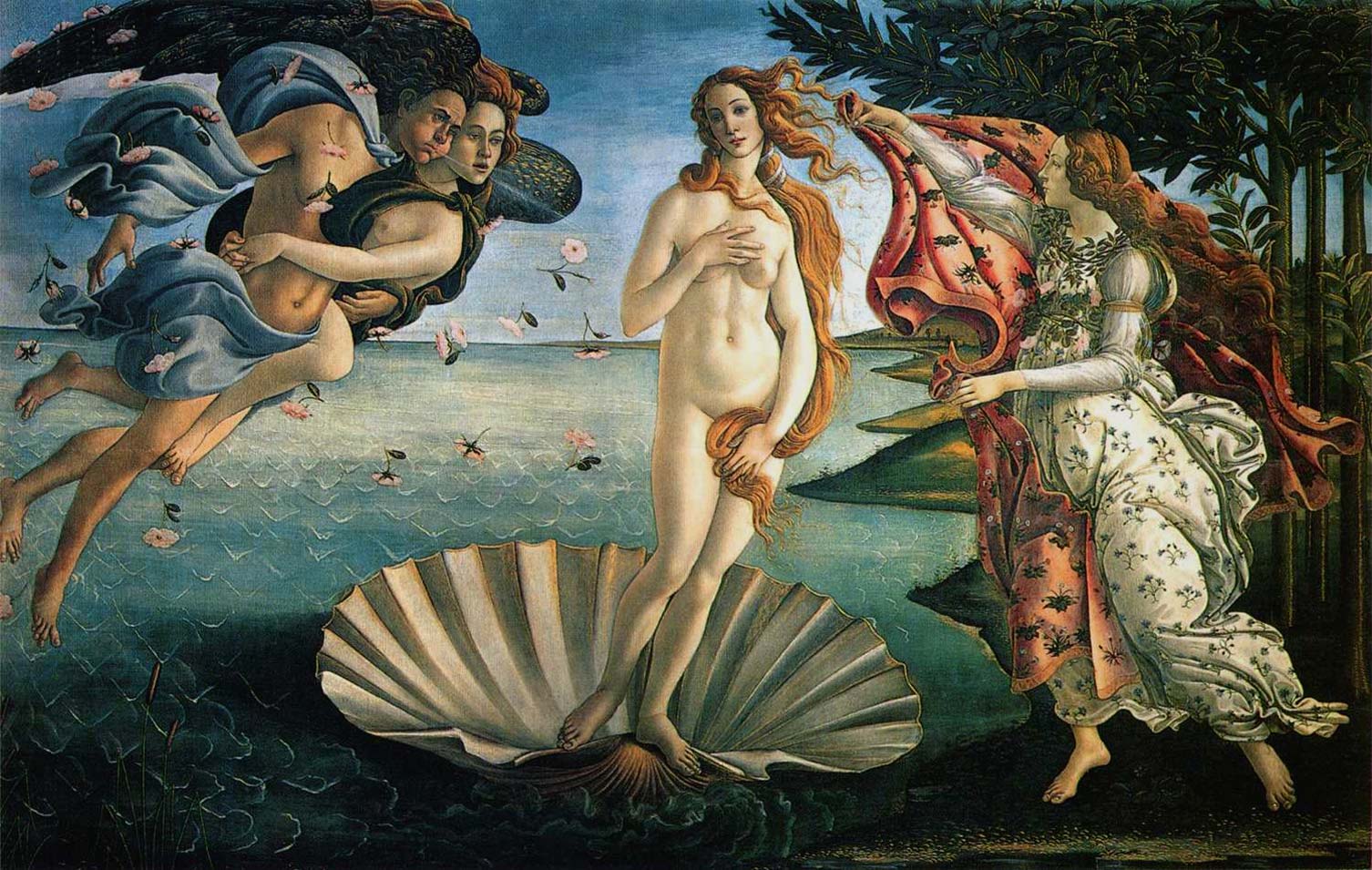
Naturally, there are positive and negative forms or deployments of production. The "good" and the "bad," as determined by our reason and perceptive senses. Hence, the poetic turn of phrase and the banal imprecation, the lovely song and the out-of-tune piano, Nabakov's Lolita and the propaganda warfare manual, the mythical cure for cancer and the wonder-weapon of biological warfare, and so on. It follows that classifications of good and bad depend on the perspective (Lolita as poetry or morally deprived rot (to, say, the cultural reactionary), the biological weapon as good for inventor bad for foe, etc.). And questions of scientific advancement depend on an idea of advancement. Progress is highly contested. Even art, whose pulchritude is the most clear-cut example of innocent production I can think of, is contested and controversial. It is a grab-bag, widely encompassing, and incapable of escaping its social and human influence. Therefore, Botticelli's "The Birth of Venus" can be seen as a symbolic masterwork or pornographic, anti-Christian mythology. The above examples serve to illustrate the inherent duality of things, which qualifies only as a digression in this tract. I press on.

Taking as given that production should be "good," without tackling the question of what is good and what is bad, I suggest that production should be. I mean, people should produce, and those with more brainpower, artistic talent, energy, or any other productive force (which can all be, to some extent, developed and honed during life), should produce more. This makes for a more beautiful, richer, more interesting and inspirational world and society to inhabit. Channeling potential energy into the kinetic energy of construction, formation, manipulation provides the stuff which enkindles the spirit. Art and functionality coupled engender enrichment and amelioration.

The second part of the puzzle has to do with need. Human beings have material needs for the avoidance of death. We also appear to have social needs, such as acceptance, flourishing interpersonal relationships - in short, to love and be loved - ego-based needs, such as self-esteem, and cognitive and creative needs - we need to stimulate that gray and white matter. We need to exercise these functions in order to be "complete" human beings - to sate physical requirements and retain self-awareness, ego, cognitive function, and aesthetic sensibility.

Needs imply consumption, but I argue that they are not fully comprehensible except in conjunction with production. Consumption occurs for the sake of production. Production is naught without the fuel of consumption. However, consumption for the sake of consumption is also gratifying. Food and drink are the most immediate and accessible example - they cause pleasure. Their gobbling and glugging represent a cornerstone of the Epicurean philosophy. In addition to being desirable and pleasurable in their own right, consumption of food and drink can be purposive - directed at production. They are literally fuel and produce the energy from which all action is dependent. They can be shared, they lead to merrymaking, they are necessary. As in all things, moderation is counseled, and minimizing consumption while optimizing energy and happiness outcomes is ideal. The hedonic treadmill illustrates the point. The principle of the hedonic treadmill is that, despite increased consumption, greater happiness is not usually achieved, because, among other things, rising and mutating expectations and desires raise the stakes ever higher. Happiness has surprisingly little to do with the amount of consumption, though there is obviously a lower bound below which squalor implies such deficiency that needs are not met and happiness is elusive. I propose the principle that minimizing consumption of all things while maximizing production is the optimal model for human life.

Minimizing consumption while maximizing production is a lot like "producing more with less." Productivity is key, but so is a sense of justice, need (as opposed to want), and a recognition of the value of production. Justice implies sharing the communal endowment, giving recognition where it is due, repaying debts and dues, while valuing production means recognizing that it constructs and determines our world. A person whose consumption outweigh's their production is a leech on the productive capacity of the planet and the output of others. He or she or it whose production supersedes their consumption has a net positive effect on the world - makes it more gorgeous, more interesting, more pleasing. It seems unlikely that the exchange of consumption and production is one to one. Which makes the enterprise of comparing production and consumption vectors dubious. It is obvious, however, that more production of "good" or positive ideas, artwork, constructions, and actions, results in a more variegated planet, and that we are the communal benefactors of that production. Many productions are, in economic terms, non-rival and non-excludable, meaning it is difficult to obviate the addition of consumers, and the cost of adding an additional consumer is close to zero. Goods which are like this include murals, bridges and dams and other infrastructure, public benefits of education, music and architecture and artistic flourishes to functional constructions, books and libraries, parks, etc. In this way, a person or a small group can produce something whose benefits permeate, unbounded. The rule of thumb: Produce more, consume less.

To put it into perspective, I subject myself to the magnifying glass: What do I produce and consume? For one, I have been undeniably and continuously dependent on my parents my entire life. They satisfy my material needs, whose satisfaction has allowed me to pursue creative, intellectual, and leisurely pursuits of all stripes. They foot the bill, they nurture, they voluntarily enslave themselves to my whims. What do I give back? My progenitors certainly reap some amount of satisfaction from having produced and raised me (Indeed, I am quite stupendous). That was their goal; that it is and has come to fruition in multifarious ways must be a source of great joy and wonder for them. Not only that, but I remain close to them. I am their friend. I love them. The bond between us is mutually or communally produced. The social unit made up of people is one of self-evident interdependence, whose purpose is to satisfy all members and contributers. This unit is part of a self-sustaining and repeating system. I produce the extant unit through belonging and playing my part, and further down the line I am expected to perpetuate the social construct with my own family and offspring, and so on and so on. I consume food, drink, shelter, security of mind and body. I produce thoughts, my brain builds synapse bridges, I develop skills and objective-driven capabilities. I make art sometimes, or all the time, I influence those around me with my words and actions (as they, in turn, influence me). I prepare for the future. I am an investment; my parents and I, my friends, my teachers, and the society are investors in my human capital. I work and produce to pay dividends and repay them their dedication and contribution to my personal development. Work is production, and work has as many guises and purposes as can be formulated by the fecund imagination.

It would appear to be a shame if, with all of the tangible and intangible investments in me, I turned out to be a wastrel, a rogue, or a self-absorbed, thankless jerk, refusing to take responsibility for all that has been given (produced for) me. I am modest about what a good life is, but there are many iterations of a bad life, many of which can be characterized by an improper or unhealthy consumption to production ratio. Consider the layabout, the highly capable welfare recipient, the larcenist, the Paris Hilton, the destructor. A life leaning immoderately towards consumption might appear to be desirable, but it is lacks fulfillment. It does not stimulate the social, creative, and cognitive - the productive - areas of our being.

Happy New Years!
Resolution 1: Produce more, consume less

Tuesday, July 21, 2009

Coming and going and gadabouting

Since my formative years, I have attested to a strong desire to travel. My minor obsession was sown by my parents, who brought me from Florida to British Colombia before a dozen years had graced my blond brow. As my mane browned, my world-wise parents devoted spare time and money to my international, itinerant education. My lessons were taught by the coral of Bora Bora, the croisant of Paris, the Volkswagons of Taxco, the black waters of Istanbul, the harbor of Bergen, the slums of San Jose, the neons of Las Vegas, and the sausages of Austria. Abroad, I was a freewheeling sponge. I obediently dedicated myself to my obligations: observe and enjoy.

Between Canada with the gramps and my most recent international flight, 22 countries have borne my heavy feet for a significant period of time. Now I return from six months abroad in Cuenca, Ecuador and Santiago, Chile. The inhabitants of those lands amiably demanded the development of bilingualism, which I delivered. Their societies, people, and institutions and I interacted. We changed each other, but they changed me more, by virtue of more mass. I tried to resist, but alteration is inevitable. I capitulated. I had no other choice! But I maintained my suspicion, skepticism, and interrogative nature. I refused to believe anything which I could better disbelieve. Knowing I could know nothing, I tried to analyze things objectively. HAH! I learned that all observation is theory laden. All is sucked into a philosophical vortex of past experience.

So what do years of travel, purported travel love, and modern migrations produce. A kind of human universalism which is founded on principles of fundamental human similarity and subsequent, life-formed, and superficial cultural difference. Anthony Burgess affirms my belief, " Fundamentally people are all the same, and I've lived among enough different races long enough to be dogmatic about this."

I continue to express some other thoughts: no two things are the same, all things are connected, cause and effect is impregnable, and purity is non-existent. At least, these are some of my basic beliefs, based on my 21 years and my perusal of the accumulation of recorded human experience. They do not well-match any thought-system that I am aware of, but rather represent bits from here and there; from the forms and figures of my life. My philosophy is a whole, composed by innumerable influences, ideas, and impressions.
A character in a Janwillem van de Wetering - one of my many i's - novel called The Japanese Corpse presents the position eloquently: "What would I be? A good question. I have no answer. My mind is clouded by the countless thoughts with which I have identified myself and which have all left their traces."

It appears to me that delineated doctrines and ideologies are limiting and unrealistic. They are symbolic, theoretical, imperfect. And, we are equally imperfect, in our roles as adherents, constructors, channelers, etc. Ideology serves a purpose, but works best when paired with aggressive skepticism and liberal democracy; freedom to share, evaluate, and choose, in the absence of imposing thought-crushing power, represents the best outcome in the philosophical and moral realm. We should combine human and personal experience to settle on personal belief: what is and what should be: the structures of science and metaphysics: our understanding of the world and its features.

In a future writing, I will explore whether or not some personal thought-systems should be considered to be better or more desirable than others, and what that should mean for the actions of individuals. For now, I go full circle in order leave this digressive article where it began: travel.

Travel, according to my aforementioned propositions, is (in part) an expedition for observation of human cultural differences. It is an expansion of experience, hence an expansion of the foundation from which we make belief choices. It is risky and radical, involving new bumper car contexts of cause and effect, influence and mutation. New friends and figures and institutions and forces, channeled through our theory-laden viewfinders, distort that which we know and impulse change. With the great human power of personal sovereignty, we decide to change positively or negatively - evolve or devolve. And, of course, change is inevitable...

Friday, April 17, 2009

Unforgivable negligence

It is clear now that my nonchalant negligence and blasé air is all a show. A fragile facade under which I cower and curse and rend my garments. You see, I am not content with my pathetic laziness and procrastination. I would that I were of heroic determination and discipline, capable of withstanding any pernicious temptation and doing constantly that which is right... for me. My culpability weighs me down, friend-followers, I swear it on the grave of my deceased albino rat, Bebo. Would that I could write to you every day! About interesting themes, instead of my dull self deprecations. Indeed, this is a sad day... Or is it? You see, I am back! I am here. Here for YOU. And for ME. We can improve ourselves TOGETHER. Without a doubt, this is a glorious event! Do you not see? I have come crawling back to you, repentant, but more mighty for having overcome my malaise. I return, resplendent and valiant from the sad and noisome pit of shame. Dress yourself in excited preparation for brilliantly innovative or else otherwise mildly interesting entries. They are coming on the wave of cursory meditation. Get ready!

Friday, January 02, 2009

New year's resos

I think perhaps that if people knew they lacked the ability to improve themselves, they would stop living. I am glad we are mutable men, women, and transgenders. Self-improvement is a coruscating carrot. It keeps us going.

In the new year period, self-examination, which should be done constantly, becomes popular. May we look at ourselves and then excise, augment, and alter in hopes of a more happy and confident future. Here are (some) of my resolutions:

*Fear less, hope more; eat less, chew more; whine less, breathe more; talk less, say more; love more

**Nevertheless, talk more

*Become more masterful at language (Spanish, English)

*Dominate the bass, play music

*laugh and smile and incite laughter and smiles

*Stand up for truths and beliefs

*Discontinue passive-aggressive and dishonest tendencies

*Be more decisive and figure out what it is I want